
AI Can't Do Everything. Why It Takes a Human Being to Restructure Your Layout Effectively
That's where we come in.
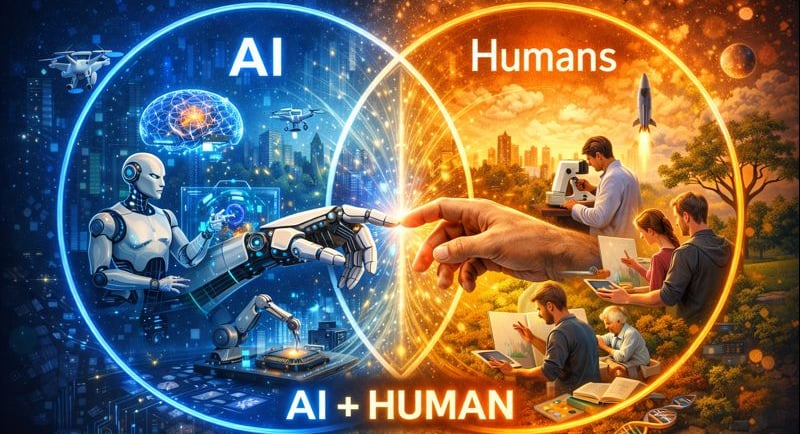
Artificial intelligence has changed the way we work. It can generate content in seconds, analyze data, suggest designs, and automate repetitive tasks that once consumed hours of our day. It's an incredible tool—and one that's becoming an essential part of many creative workflows.
But there's one area where AI still falls short: making thoughtful, strategic layout decisions that require human judgment.
Whether you're redesigning a website, refreshing a magazine, reorganizing a catalog, or improving a presentation, restructuring a layout isn't just about moving boxes around. It's about understanding people.
A Layout Isn't Just Design—It's Communication
Every layout tells a story.
The placement of headlines, images, white space, calls to action, and supporting content influences how people consume information. A successful layout guides the reader naturally from one element to the next, helping them understand what's important and what action to take.
AI can recognize patterns and recommend arrangements based on existing designs. What it can't truly understand is why your audience behaves the way it does or what emotional response you're trying to create.
Those decisions require empathy, experience, and context.
Context Matters More Than Algorithms
AI works by identifying patterns in data.
Humans work by understanding purpose.
Imagine you're redesigning a nonprofit's annual report. The goal isn't simply to make it look modern—it's to inspire trust, communicate impact, and encourage future donations.
Or consider an e-commerce homepage. Rearranging sections isn't just a design exercise; it's about anticipating customer questions, reducing friction, and guiding visitors toward making a purchase.
These objectives often require tradeoffs that no algorithm can fully evaluate because they depend on business goals, brand identity, customer psychology, and organizational priorities.
Every Project Has Unique Challenges
No two layouts are exactly alike.
Businesses evolve. Brands reposition themselves. Customer expectations change. Sometimes content grows organically over years, leaving behind clutter and inconsistencies that need careful untangling.
A human designer or layout specialist can recognize issues such as:
Information that's competing for attention
Navigation that's confusing users
Content that's no longer aligned with business goals
Visual hierarchy that doesn't support decision-making
Opportunities to simplify the user experience
AI may identify symptoms.
A human identifies the underlying problem.
Experience Can't Be Automated
Professional designers don't simply arrange elements—they solve problems.
Years of working with different industries, audiences, and communication goals build intuition that isn't easily replicated.
Experienced professionals ask questions AI can't answer on its own:
What is the most important message?
Who is this intended for?
What should users notice first?
What information belongs together?
What can be removed entirely?
Often, improving a layout isn't about adding more—it's about knowing what to eliminate.
That's a distinctly human skill.
Collaboration Leads to Better Results
One of the greatest strengths humans bring is conversation.
As projects evolve, priorities change. Clients provide feedback. New ideas emerge. Unexpected challenges appear.
A human can interpret vague feedback like:
"I want it to feel more approachable."
"It seems too busy."
"We're losing customers somewhere."
Those comments require interpretation, discussion, and creative problem-solving.
AI can generate options, but it doesn't participate in collaborative decision-making the way an experienced professional can.
AI Is an Excellent Assistant
None of this diminishes AI's value.
In fact, AI can dramatically improve productivity by helping generate content, summarize information, create initial wireframes, suggest color palettes, or automate repetitive production tasks.
Used wisely, AI allows creative professionals to spend less time on routine work and more time solving meaningful problems.
That's where the real value lies.
The Best Results Come From Human Expertise Enhanced by AI
Rather than viewing AI as a replacement for human designers, it's more accurate to think of it as a powerful assistant.
AI accelerates.
Humans evaluate.
AI suggests.
Humans prioritize.
AI generates possibilities.
Humans make decisions.
When restructuring a layout, technology can provide speed—but only people bring the judgment, creativity, empathy, and strategic thinking needed to create designs that truly connect with an audience.
Finally
AI has become one of the most valuable tools available to creative professionals, but it's still just that—a tool.
Effective layout restructuring isn't simply about organizing content. It's about understanding people, communicating clearly, supporting business objectives, and creating experiences that feel intuitive and engaging.
Those qualities don't come from algorithms alone.
They come from human insight.
The most successful projects aren't created by AI or humans working independently—they're created when experienced professionals use AI strategically while applying the critical thinking, creativity, and empathy that only people can provide.