
Why a Human Designer Still Beats AI at Layout Restructuring
It's about understanding versus prediction
Why a Human Designer Still Beats AI at Layout Restructuring
Artificial intelligence has become remarkably good at generating layouts. Give it a prompt, and it can produce landing pages, dashboards, presentations, or magazine-style compositions in seconds. It's fast, inexpensive, and increasingly capable.
But when it comes to restructuring an existing layout—especially one with real business goals, technical constraints, and user expectations—a skilled human designer still has a significant advantage.
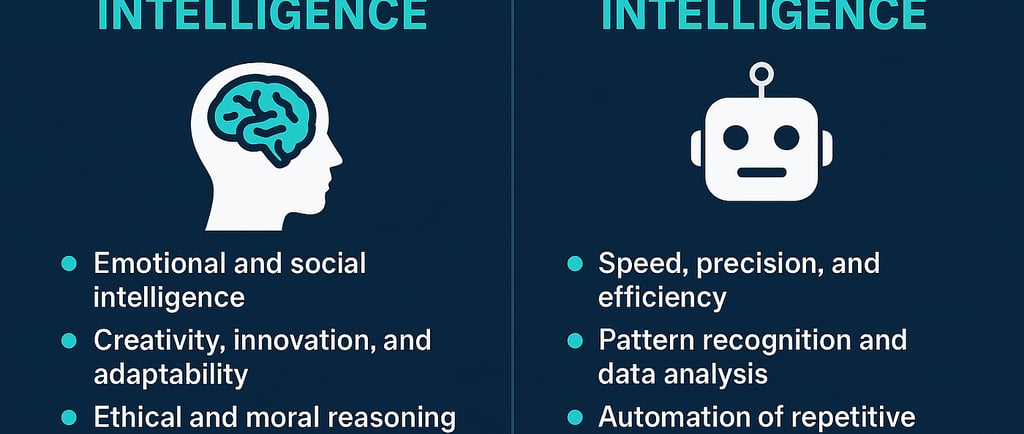
The difference isn't creativity versus automation. It's understanding versus prediction.
AI Rearranges. Humans Reevaluate.
Most AI design tools work by recognizing patterns from enormous datasets. They know what a modern dashboard or ecommerce homepage typically looks like.
A human designer starts somewhere else.
Before moving a single element, they ask questions:
Why is this page underperforming?
What are users struggling to find?
Which content deserves more attention?
What business goal should this layout support?
These answers shape every design decision. Layout restructuring isn't about making something prettier—it's about making it work better.
Context Is More Important Than Patterns
Imagine redesigning an internal company dashboard.
An AI might reorganize panels according to common design conventions. It may improve spacing, typography, and visual hierarchy.
A human designer considers factors AI often can't fully understand:
Which data employees check first every morning
Which metrics executives care about
Which workflows are causing frustration
What organizational priorities have recently changed
The result isn't simply a cleaner interface. It's a layout that supports the people using it every day.
Every Pixel Has a Reason
Experienced designers rarely move components without purpose.
Changing the position of a navigation menu might reduce confusion.
Increasing whitespace around a pricing section may improve readability.
Moving a call-to-action above supporting content could increase conversions.
These decisions are informed by research, stakeholder feedback, usability testing, analytics, and experience—not just visual trends.
AI can suggest possibilities.
Human designers evaluate consequences.
Good Design Is Often About Trade-Offs
Real projects involve competing priorities.
Marketing wants larger promotional banners.
Engineering wants simpler implementation.
Legal needs required disclosures.
Accessibility standards must be met.
Brand teams expect consistency.
Users simply want to complete their tasks quickly.
A human designer balances these competing needs and negotiates compromises that support the overall product.
AI doesn't participate in these conversations. It doesn't weigh business risk or build consensus across teams.
Layout Restructuring Requires Empathy
People don't interact with interfaces the same way.
New customers need guidance.
Returning users value efficiency.
Power users expect shortcuts.
Older audiences may prefer larger text.
Users with disabilities rely on accessible navigation and predictable structure.
Human designers think about these experiences throughout the restructuring process. Empathy influences hierarchy, spacing, navigation, and interaction in ways that extend beyond aesthetic choices.
AI Doesn't Know What Happened Last Quarter
Many redesigns happen because something changed.
A company launched a new product.
Customer feedback revealed confusion.
Analytics showed a drop in conversions.
Support tickets highlighted recurring problems.
Stakeholders introduced new priorities.
These decisions are rooted in organizational history and evolving business strategy. Unless someone explicitly provides that context, AI has no understanding of why the redesign is happening.
Human designers naturally incorporate these factors into their recommendations.
Collaboration Is Part of the Design Process
The best layouts rarely emerge from a single draft.
Designers present ideas, gather feedback, revise concepts, explain trade-offs, and adapt based on discussions with developers, product managers, marketers, executives, and users.
Layout restructuring is an iterative process.
AI can generate options.
Human designers facilitate decisions.
The Strongest Results Combine Human Judgment with AI Speed
This isn't an argument against AI.
AI is an excellent assistant. It can generate wireframes, explore multiple concepts, suggest layouts, summarize feedback, and automate repetitive production tasks.
These capabilities save designers valuable time.
But deciding what should change, why it should change, and whether the new structure actually solves the problem remains a fundamentally human responsibility.
The most effective design teams don't replace designers with AI.
They give designers AI-powered tools that free them to focus on strategy, usability, communication, and critical thinking.
Lastly
Layout restructuring isn't just moving boxes around a page.
It's understanding people, business objectives, content hierarchy, accessibility, user behavior, technical limitations, and long-term product strategy—all at the same time.
AI can generate layouts at remarkable speed.
A human designer brings judgment, context, empathy, and intentional decision-making that transforms a layout from merely attractive into genuinely effective.
As AI continues to improve, its role in design will undoubtedly expand. But the ability to understand complex problems, balance competing priorities, and design with purpose remains one of the most valuable skills a human designer brings to every project.